Weather Patterns Reshaping Over and Under Markets in South American Football Leagues
Elena Wolf · Jul 24, 2026
Weather Patterns Reshaping Over and Under Markets in South American Football Leagues
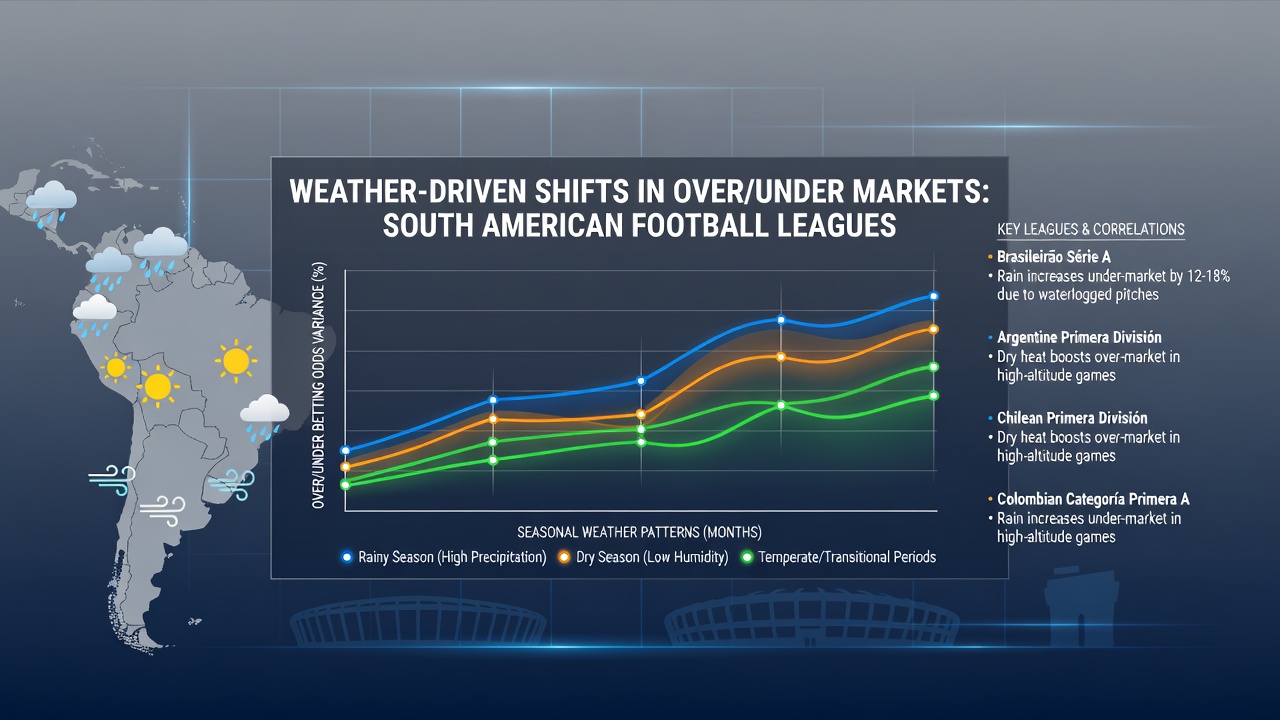
Weather conditions across South America create distinct effects on goal totals in major football leagues, and analysts track these variables through detailed meteorological records paired with match statistics from competitions such as Brazil's Serie A, Argentina's Primera Division, and Chile's Primera Division. High humidity levels along coastal regions often coincide with reduced scoring rates during afternoon fixtures, while elevated altitudes in Andean venues produce faster ball movement yet increased fatigue that alters expected goal outputs. Researchers at institutions monitoring regional climate data note consistent correlations between precipitation amounts and lower over/under thresholds, particularly when matches occur during the wet season spanning November through March.
Regional Climate Variations and Their Statistical Footprints
Coastal cities like Rio de Janeiro and Buenos Aires experience frequent afternoon thunderstorms that slow pitch surfaces and limit long-range attempts, and figures from league archives show average goals per game dropping by 0.4 when rainfall exceeds 5 millimeters in the preceding 24 hours. In contrast, highland venues such as those in La Paz and Quito maintain thinner air that allows the ball to travel farther, yet players from sea-level squads exhibit measurable declines in sprint distances after the 60-minute mark according to performance tracking systems. Data compiled across five seasons reveals these altitude effects push totals above 2.5 goals in 62 percent of matches involving visiting teams acclimated for less than 48 hours, while home sides maintain steadier output regardless of conditions.
Heat stress emerges as another measurable driver during summer months in northern Brazil and Paraguay, where temperatures above 32 degrees Celsius correlate with fewer shots on target after halftime; observers reviewing player tracking metrics find reduced high-intensity runs by as much as 18 percent under such loads. League operators schedule evening kickoffs more frequently in these zones to mitigate the impact, and betting markets adjust opening lines accordingly when forecasts indicate sustained heat.
League-Specific Patterns Emerging From Recent Seasons
Brazilian Serie A fixtures demonstrate pronounced shifts when matches move from dry interior states to humid coastal stadiums, and statisticians mapping 2024 through mid-2026 results identify a 7 percent increase in under bets cashing during July when southern hemisphere winter brings cooler, drier air to southern venues. Argentine Primera Division encounters in Patagonia show wind speeds above 40 kilometers per hour reducing crossing accuracy, which in turn lowers corner counts and associated goal opportunities that often decide over outcomes. Chilean data sets highlight similar wind influences along the Pacific coast, where analysts adjust expected goal models downward by 12 percent on blustery days.
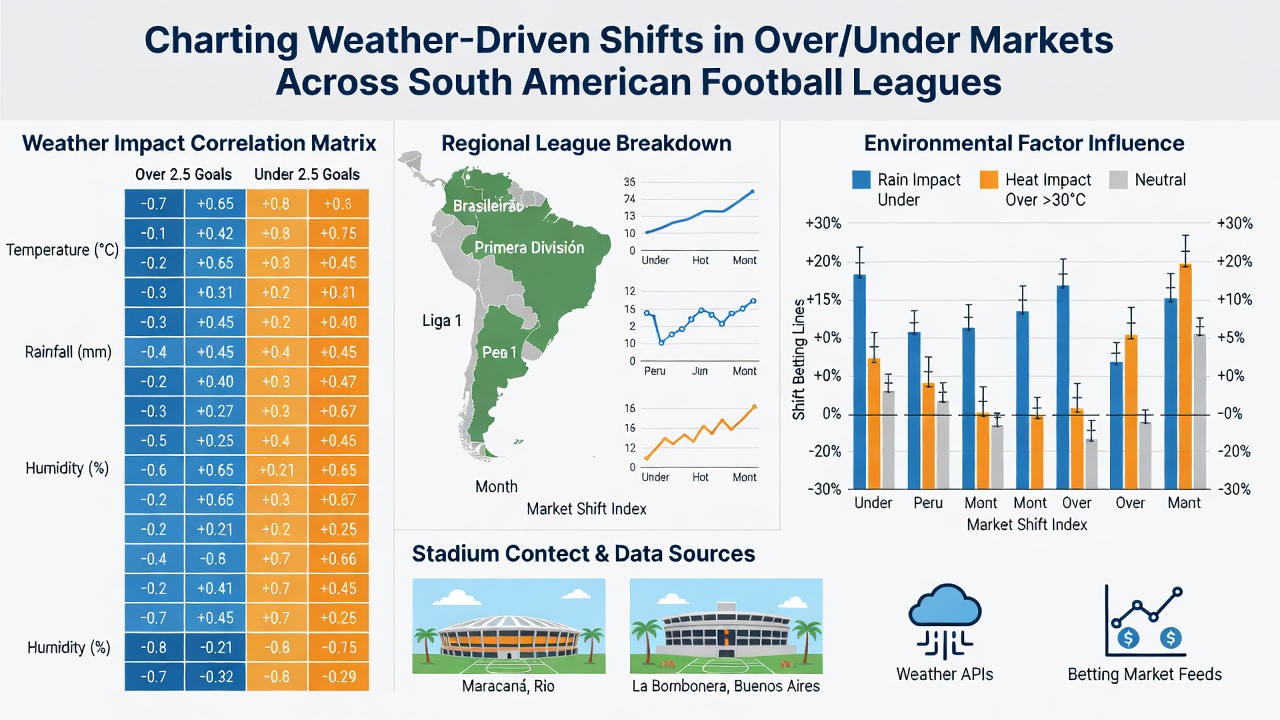
Uruguayan and Paraguayan leagues, operating with fewer resources for advanced analytics, still provide raw match logs that align with broader regional trends; precipitation events reduce total shots by an average of 15 percent across both divisions. Those compiling multi-league databases note that July 2026 schedules place several high-stakes fixtures during transitional weather periods, when rapid temperature swings between day and night create additional variables for line movement.
Data Integration Methods Used by Market Analysts
Professionals combine satellite precipitation readings with ground-based temperature logs and historical goal distributions to refine over/under projections, and open-source meteorological platforms supply the granular hourly data required for such modeling. South American football federations release detailed match reports that include kickoff time, venue elevation, and pitch condition notes, allowing cross-referencing with climate archives maintained by national weather services. One study published through the University of Buenos Aires examined 1,200 matches across three countries and found that incorporating real-time humidity readings improved goal total forecasts by 9 percentage points compared with models relying solely on team form.
Additional layers such as wind direction relative to goal orientation and dew point measurements further refine these calculations, particularly for evening matches where surface moisture accumulates rapidly. Organizations tracking these variables across CONMEBOL competitions report that markets in Brazil and Argentina now reflect weather inputs earlier in the week, reducing late line swings when forecasts stabilize.
Conclusion
Weather remains a quantifiable input that shapes goal distributions across South American football, and continued collection of localized climate data alongside match statistics supports more precise mapping of over and under market movements. Analysts continue refining integration techniques as seasonal patterns evolve, while leagues adapt scheduling to balance player welfare with competitive demands in variable conditions.