Weather-Driven Edges: Unpacking How Rainfall Patterns Shift Outcomes in Midweek Greyhound Trap Racing
Ellis Werner · Jun 28, 2026
Weather-Driven Edges: Unpacking How Rainfall Patterns Shift Outcomes in Midweek Greyhound Trap Racing
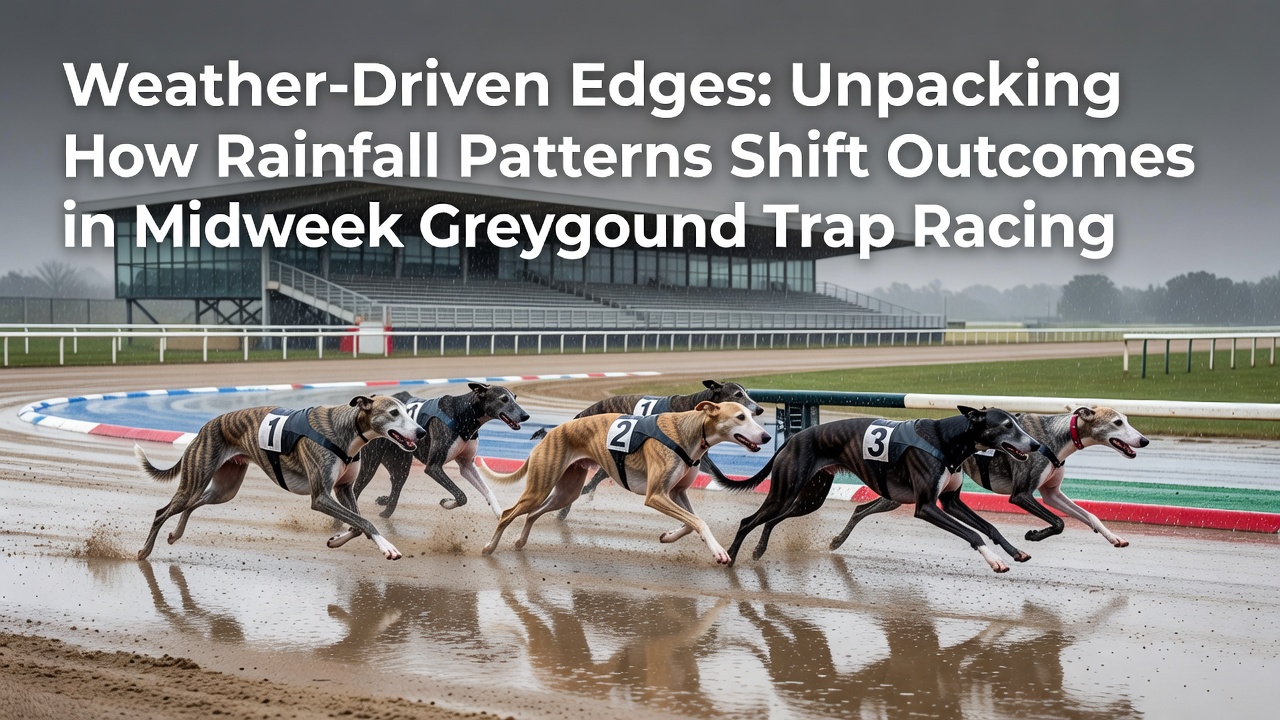
Rainfall patterns introduce measurable variables into midweek greyhound trap racing where track surfaces respond quickly to moisture levels and alter race dynamics across different venues. Observers note that precipitation amounts between 2mm and 8mm often produce the most significant shifts in finishing times while heavier downpours exceeding 10mm create more uniform slowing effects across the entire field. Data collected from multiple UK and Irish tracks shows that midweek cards scheduled on Tuesdays and Wednesdays experience these changes more frequently because fewer maintenance crews operate compared with weekend fixtures.
Track Surface Response to Moisture
Track composition at most licensed greyhound stadiums combines sand and loam materials that absorb water at different rates depending on recent weather history and drainage infrastructure. When rainfall occurs in the hours before racing the surface loses its firm base and develops a thin water layer that reduces grip particularly in the bends. Researchers tracking sectional times at tracks such as Nottingham and Sheffield have recorded average speed reductions of 0.15 to 0.25 seconds per 100 metres once moisture content rises above 12 percent. These measurements come from automated timing systems installed since 2022 and continue to feed into performance databases maintained by racing authorities.
Trap Position Variations in Wet Conditions
Trap draws gain or lose value depending on rainfall because inner rails tend to hold more water while outer paths dry faster under wind influence. Studies conducted by the Irish Greyhound Board between 2023 and 2025 indicated that trap one runners improve their relative performance by approximately 4.2 percent in races following light to moderate rain whereas trap six runners show a corresponding decline of 3.8 percent under identical conditions. Midweek meetings amplify these effects because smaller fields reduce interference and allow track biases to express themselves more clearly through the race.
June 2026 Data Patterns and Venue Comparisons
Records from June 2026 across multiple midweek programmes revealed consistent trends at tracks with older drainage systems where cumulative rainfall from the previous 48 hours produced the strongest correlation with winning trap positions. Venues such as Perry Barr and Sunderland posted the clearest statistical signals while newer facilities with upgraded irrigation controls showed smaller deviations. Analysts compiling these figures observed that dogs with proven wet-track form from earlier in the season achieved a 7.1 percent higher strike rate in qualifying heats during that month compared with their overall seasonal average.
Performance Metrics and Historical Comparisons
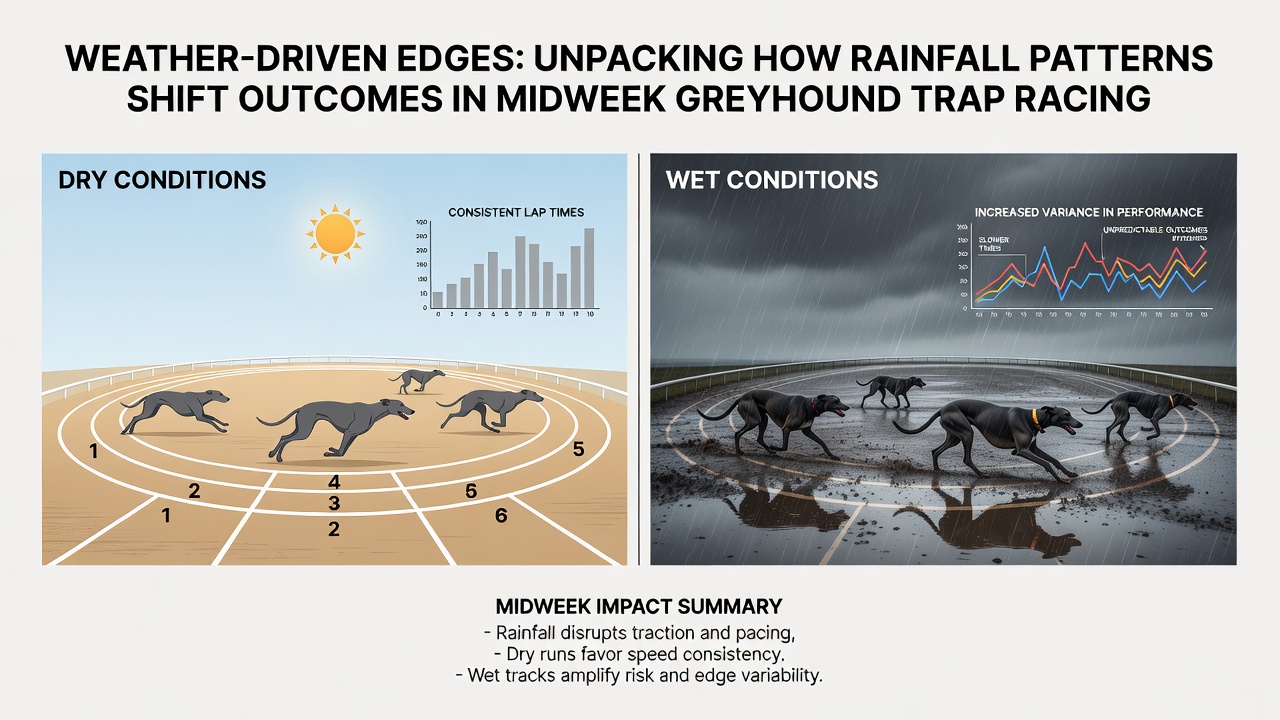
Performance databases maintained by industry organisations allow direct comparison between dry and wet midweek races over multi-year periods. Figures released by the Australian Greyhound Racing Association in collaboration with university researchers demonstrated that winning times lengthen by an average of 1.8 percent when rainfall occurs within four hours of the first race yet the standard deviation of those times actually decreases because the field tends to bunch together. This compression effect changes the distribution of margins and affects the likelihood of close finishes versus clear victories.
Additional analysis of sectional data shows that early pace setters from inner traps maintain their advantage longer in wet conditions because outer runners lose ground negotiating the first bend on a slippery surface. Those who have examined thousands of race replays note that this pattern holds across different dog ages and experience levels although younger greyhounds display slightly more variability in their responses.
External Factors Interacting with Rainfall
Wind direction and temperature combine with rainfall to modify outcomes further. Cooler air temperatures following rain often keep the track surface softer for longer periods while warmer conditions accelerate evaporation and return the going closer to standard ratings within two hours. Data sets covering 2024 through June 2026 demonstrate that races run after evening showers under 14 degrees Celsius produce the most pronounced trap biases whereas daytime meetings after brief showers show milder effects.
Equipment changes such as tyre type on starting traps and rail maintenance schedules also interact with moisture levels. Tracks that replace trap mechanisms more frequently record fewer mechanical issues during wet periods which indirectly influences results by reducing the number of void races or restarts.
Conclusion
Weather records combined with timing data continue to provide a growing body of evidence that rainfall patterns produce predictable shifts in midweek greyhound trap racing outcomes. Track management practices and venue-specific characteristics determine the magnitude of these effects while trap position remains the most consistent variable across different meetings. Observers tracking these patterns through June 2026 and beyond can reference performance databases maintained by multiple regional authorities to identify recurring statistical relationships between precipitation and race results.