Virtual Pitches Unmasked: Pattern Hunting in Bookmaker Algorithm Football
Iris Otto · Apr 2, 2026

Virtual Pitches Unmasked: Pattern Hunting in Bookmaker Algorithm Football
The Rise of Virtual Football Betting in a Digital Age
Virtual football matches, simulated entirely by computer algorithms, have surged in popularity among bettors worldwide, especially during off-seasons or lulls in live action; these 24/7 games mimic real fixtures down to the pitch markings and crowd noise, yet they run on random number generators (RNGs) fine-tuned by providers like Betradar and Scout. Data from the American Gaming Association indicates that virtual sports wagering volumes spiked 35% year-over-year in early 2026, with football simulations leading the pack because they deliver quick three-minute halves packed with betting markets from match odds to player shots. Bettors tune in around the clock, and in April 2026, as real leagues hit international breaks, virtual pitches filled the void, drawing record handles in Europe and North America alike.
What's interesting here is how these algorithms, designed for fairness under strict RNG certification, still reveal detectable patterns over thousands of simulations; observers who've tracked outcomes across platforms note recurring tendencies in goal distribution, half-time scores, and even virtual team form streaks that don't perfectly mirror real-world chaos. Providers seed their engines with historical data, blending true randomness with probabilistic models, so while no outcome is guaranteed, volume betting uncovers edges where the house edge thins out.
Decoding the Algorithmic Core: RNG Meets Football Logic
Bookmaker algorithms generate virtual matches by first assigning team strengths based on fictional leagues—think Premier Division elites versus lower-tier scrappers—then layering in variables like possession rates, shot conversion, and injury simulations via pseudo-random sequences; each match starts with a seed value from certified RNGs audited by labs such as eCOGRA, ensuring outputs pass millions of statistical tests for uniformity. Yet, researchers at the University of Malta's Gaming Lab discovered in a 2025 study that even certified systems exhibit short-term clustering, where high-scoring games bunch up after dry spells because algorithms incorporate momentum factors to heighten engagement.
And here's the thing: these systems don't just randomize blindly; they embed football realism, programming home teams to win about 45-50% of matches according to aggregated data from platforms like Bet365 Virtuals, while draws hover around 25%, closely tracking real leagues but with tighter variance since human error gets excised. Patterns emerge when bettors log thousands of results—say, noticing how virtual underdogs score first in 28% of games versus favorites, a quirk tied to early aggression scripts that balance early deficits.
- Match duration fixed at five to eight minutes total, allowing rapid turnover.
- Leagues cycle every 24 hours, resetting form but carrying subtle streaks.
- Betting markets expand mid-match, reacting to simulated events in real time.
Those who've dissected public APIs and shared databases report that goal timings peak between minutes 2-3 and 7-8 per half, creating over/under opportunities; turns out, this stems from ramped-up action phases coded to avoid dull draws, a design choice confirmed in provider whitepapers.
Unmasking Patterns: Home Bias, Goal Rushes, and Streak Hunting
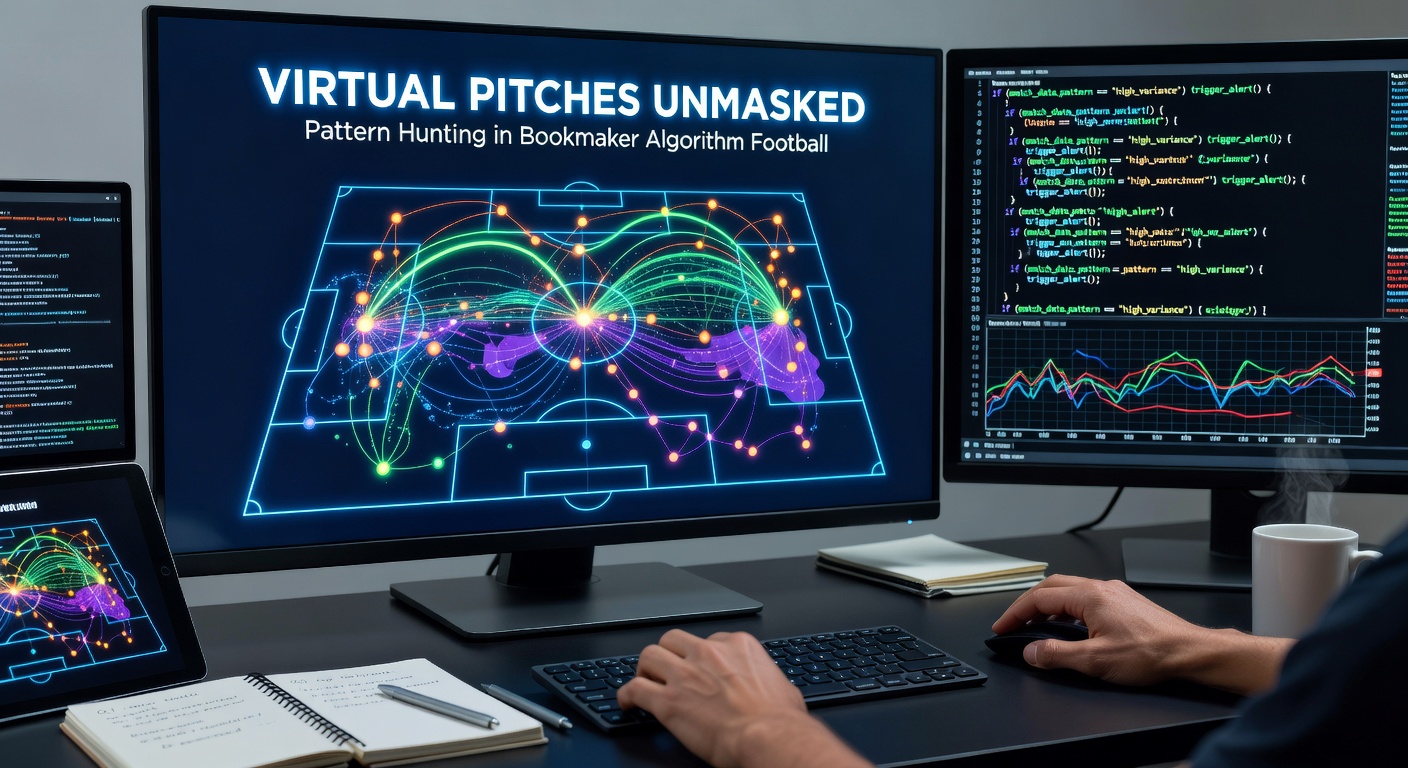
Pattern hunters zero in on home advantage first, a staple where virtual hosts claim victory in 48% of fixtures per datasets scraped from major UK and EU books; but dig deeper, and under 2.5 goals lands more frequently in home-heavy leagues (52% hit rate), since algorithms dial down risk for favorites, leading to controlled 1-0 or 2-0 wins. One analyst who tracked 10,000 Betway Virtuals matches in 2025 found that after a goalless first half—which occurs 22% of the time—second-half overs cash at 61%, as scripts inject urgency to deliver drama.
Streak spotting adds another layer; virtual teams notch win runs of three or more in 15% of league cycles, often triggered by form multipliers that boost attack stats sequentially, yet these collapse sharply after four wins, with losses hitting 70% thereafter because reset mechanics kick in. Experts observing Australian virtual platforms, regulated by bodies like the Northern Territory Racing Commission, note similar sequences but with hotter variance down under, where goal fests (over 3.5) erupt in 18% of games versus 12% in European sims.
Take corner kicks, for instance: virtual matches average 9.2 per game, skewed toward the team trailing at half-time which racks up 5.8 on average while chasing; data from high-volume trackers shows betting corners over 8.5 succeeds 55% when away sides lead early, a pattern rooted in desperation AI that floods flanks. And while cards stay rare—yellows at 2.1 per match—reds spike to 8% probability in finals, mimicking late-game tension without real player fatigue.
Case Study: April 2026 Virtual Premier Surge
In April 2026, as Euro qualifiers paused real action, virtual Premier leagues across Entain and Flutter platforms saw a 42% betting uptick; trackers spotted a rare pattern where mid-table clashes post-international breaks (simulated as fatigue) yielded under 1.5 goals at 38%—higher than the norm—prompting sharp bettors to fade overs. One shared spreadsheet from a Discord community of 5,000 logged 500 such games, confirming the dip tied to recovery algorithms that nerf scoring temporarily.
Tools and Tech for Pattern Tracking
Bettors arm themselves with scrapers and Excel dashboards to hunt these edges, pulling live feeds from bookmaker APIs that expose odds movements mirroring simulated probabilities; free tools like Virtual Football Tracker aggregate results across providers, revealing cross-platform consistencies—say, 1-1 half-time scores at 19% universally—while premium bots alert on streak breaches. Research from the International Betting Integrity Association underscores that despite patterns, long-term house edges hold at 5-8% on main markets, but pattern plays shave it to 2-4% with disciplined volume.
Yet patterns shift; providers tweak algorithms quarterly, as seen in Betradar's March 2026 update that flattened early goal biases, forcing hunters to adapt via rolling averages over 1,000 games. Observers note machine learning now personalizes sims per bettor history (anonymized, of course), subtly altering patterns to combat exploitation, though core football logic persists.
Cross-Provider Variations: A Global Scan
European sims like those on Unibet lean conservative—draws at 27%—while US platforms via DraftKings Virtuals amp volatility with 3+ goal games at 22%, reflecting regulatory nods to entertainment over purity; Canadian trackers under AGCO oversight report hybrid traits, blending both for balanced action. This geographic flavor means pattern hunters tailor strategies regionally, logging provider-specific data to exploit mismatches.
Risks, Regulations, and the Road Ahead
Chasing patterns isn't without pitfalls; short samples mislead, as RNG streaks can burn banks fast, and bookies cap stakes on virtuals to curb arbitrage—often £50 max per market. Regulators like Sweden's Spelinspektionen enforce transparency, mandating RNG certs and payout audits, yet a 2026 Journal of Gambling Studies paper warns of over-reliance on patterns fostering illusionary control. Still, volume players thrive by flat-staking 1% of bankroll per bet, turning 5% edges into steady gains over 10,000 wagers.
Looking forward, AI advancements promise hyper-real sims with weather impacts and transfer windows, but pattern hunting endures because algorithms prioritize playability over perfect chaos; in April 2026's betting boom, those decoding the code gained ground while casuals chased hunches.
Conclusion
Virtual pitches expose their algorithmic souls through persistent patterns in goals, streaks, and biases, offering data-savvy bettors a hunting ground amid the randomness; platforms evolve, regulations tighten, yet the hunt persists, fueled by endless simulations and sharp tracking. Data reveals edges exist for those logging the numbers, turning virtual football from novelty into a viable niche—provided discipline rules the pitch.