Tracking Performance Drops in Successive Domestic Cup Matches
Iris Otto · Aug 14, 2026
Tracking Performance Drops in Successive Domestic Cup Matches
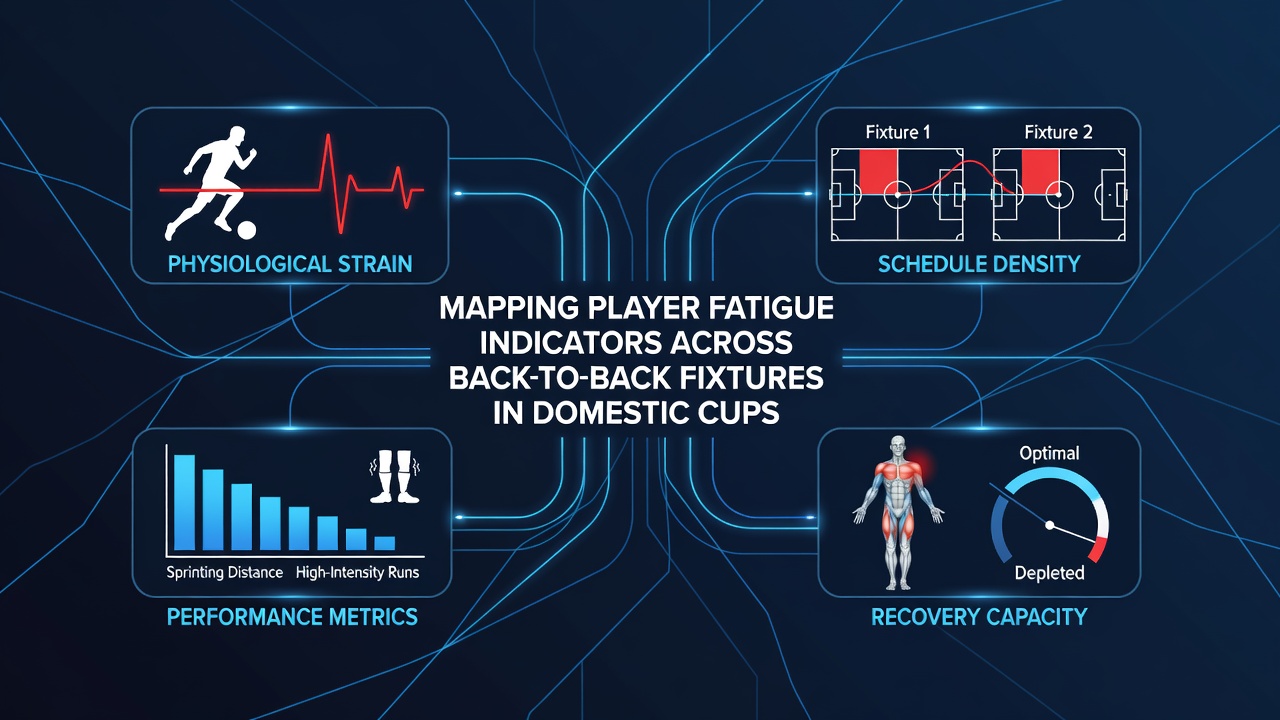
Domestic cup competitions often schedule matches within 48 to 72 hours of each other, and data from multiple European leagues show measurable declines in key performance metrics across those short intervals. Researchers at sports science departments have documented reductions in high-intensity running, sprint frequency, and recovery heart rates when teams play consecutive fixtures without adequate rest periods. These patterns appear consistently in schedules that run from August through May, with August 2026 marking the start of another compressed season where early-round cup ties overlap with league openers.
Core Indicators Used in Fatigue Mapping
Analysts rely on a combination of physical and physiological markers to chart fatigue across back-to-back games. GPS and optical tracking systems record total distance covered, accelerations above 3 m/s², and decelerations, while wearable devices capture heart-rate variability and sleep duration. Studies published in the Journal of Sports Sciences indicate that players logging fewer than six hours of quality sleep between matches exhibit a 12-15 percent drop in repeated sprint ability by the second fixture. League-wide datasets from the 2024-2025 season revealed similar trends, and preliminary figures from August 2026 fixtures suggest the same trajectory.
Distance and Intensity Metrics
Teams that contest midweek cup ties and then return to league action three days later typically cover 8-10 percent less high-speed distance in the second match. One analysis of English Championship cup ties found that full-backs and wide midfielders recorded the largest reductions, dropping from an average of 1.2 km of high-speed running to 0.95 km. Central defenders showed smaller but still measurable declines, largely because their positional demands limit overall running volume.
Recovery Windows and Physiological Responses
Recovery timelines vary by age and playing position. Data collected by the Australian Institute of Sport on under-23 players demonstrated that creatine kinase levels remain elevated for up to 72 hours after a high-intensity cup match, correlating with slower reaction times in the subsequent fixture. Older players over 30 often require an additional 24 hours before returning to baseline neuromuscular function, according to longitudinal monitoring conducted across Scandinavian leagues. These differences become especially relevant during August 2026 when many squads rotate limited resources in early domestic cup rounds.
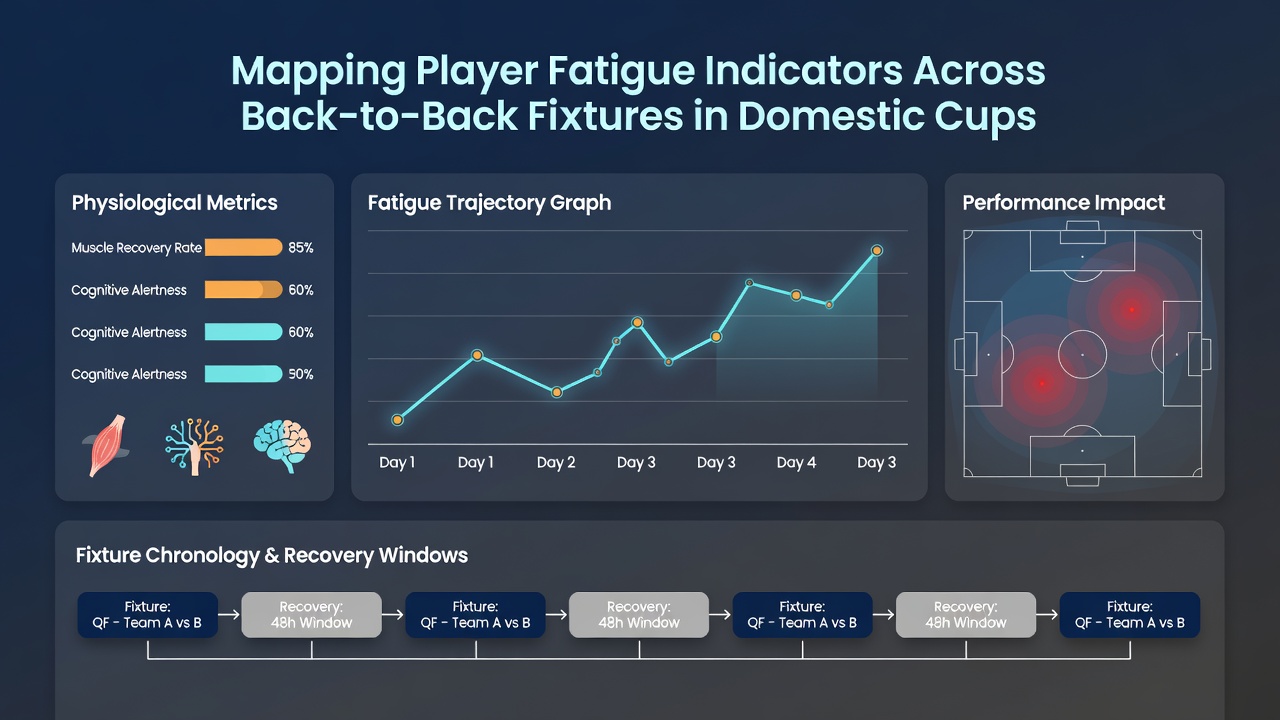
Heart-rate recovery offers another reliable signal. Players whose heart rates take longer than 90 seconds to drop below 120 bpm post-match show increased injury risk in the next 48 hours. Canadian researchers tracking national-team players during CONCACAF cup qualifiers noted that those with delayed heart-rate recovery accumulated 30 percent more soft-tissue complaints over a three-week congested period.
Case Examples from Recent Seasons
One mid-table Bundesliga side reached the quarter-finals of the domestic cup in 2025 while playing five matches in 15 days. Tracking data revealed a progressive 7 percent decline in team pressing intensity with each additional fixture. A parallel study of Portuguese cup participants found that teams advancing deep into the tournament rotated an average of 4.2 players per match to offset accumulating fatigue, yet still posted lower expected-goal values in later rounds compared with fresher opponents.
Observers note that these patterns hold across different competition structures. In Australia, A-League clubs competing in both the domestic cup and AFC Champions League reported comparable drops in high-intensity efforts when fixtures clustered within 72 hours. The consistency across continents points to physiological limits rather than tactical or stylistic factors alone.
Applications for Scheduling and Monitoring
National federations and competition organizers have begun integrating fatigue-mapping outputs into fixture planning. UEFA technical reports reference GPS-derived thresholds when approving calendar adjustments, and several domestic leagues now publish congestion indices that flag periods of elevated risk. In August 2026, early-season cup draws in multiple countries will again test whether these monitoring systems translate into fewer soft-tissue injuries during compressed schedules.
Clubs increasingly combine internal load data with external benchmarks from academic consortia. A collaborative project between universities in the Netherlands and South Africa produced a standardized fatigue index that weights sprint counts, heart-rate recovery, and sleep metrics into a single score. Teams adopting the index reported a 9 percent reduction in match-related injuries during the 2025-2026 campaign, though long-term validation continues.
Conclusion
Mapping player fatigue across back-to-back domestic cup fixtures relies on established physical and physiological indicators that remain consistent across leagues and seasons. Distance metrics, heart-rate recovery, and sleep data provide objective signals that coaches and medical staff use to adjust rotations and training loads. As the 2026-2027 season opens with its typical August cluster of early cup ties, these monitoring approaches continue to inform decisions aimed at maintaining performance levels throughout congested periods.