Spotting Value in Midweek Matches: The Role of Public Betting Data in European Leagues
Alex Baumann · Jun 7, 2026
Spotting Value in Midweek Matches: The Role of Public Betting Data in European Leagues
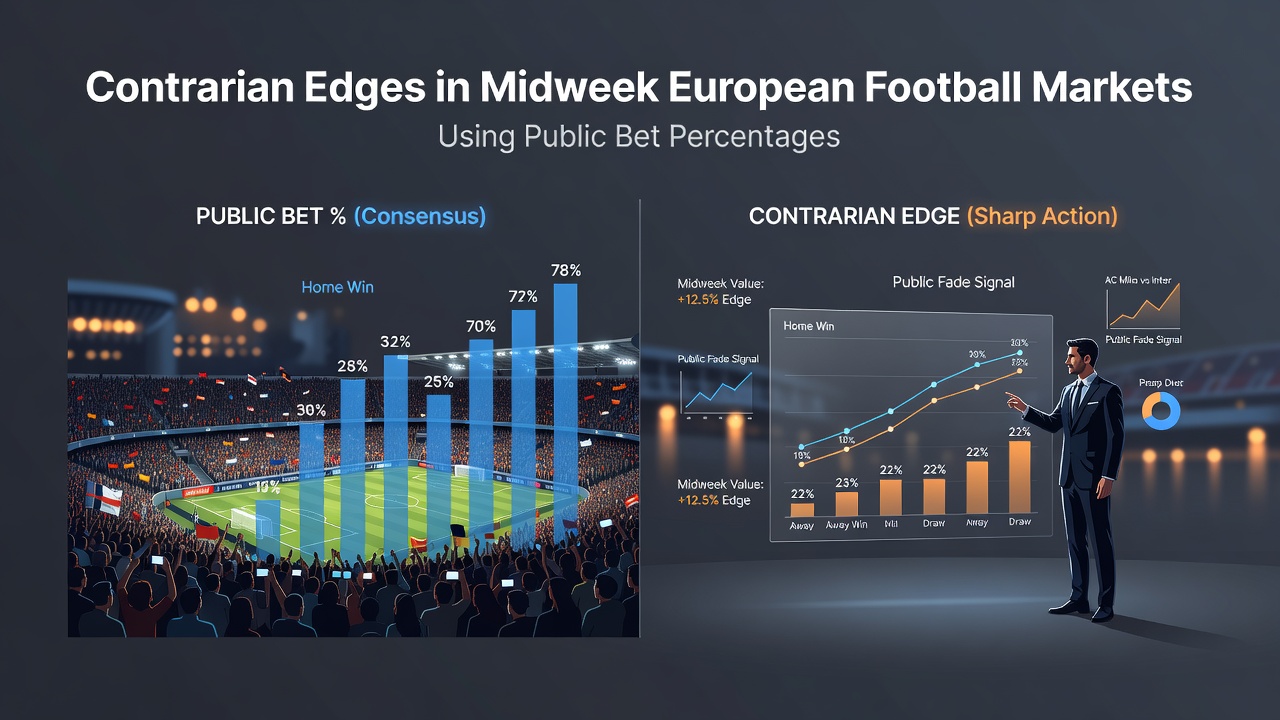
Public bet percentages provide a window into where the majority of wagers land across various European football markets, and observers note that these figures often cluster around favorites in midweek fixtures such as Champions League group stages or domestic cup replays. Research indicates that when public money exceeds 70 percent on one side, the opposing outcome frequently delivers higher returns over extended samples, particularly in matches played on Tuesdays and Wednesdays when team rotations occur more often.
Bookmakers release these percentages in real time through their platforms, allowing bettors to track imbalances as kickoff approaches. Data shows that midweek schedules introduce variables like travel fatigue and squad depth differences, which public bettors sometimes overlook when they follow recent form without deeper context. Those who've studied thousands of such games find that fading heavy public support on the favorite aligns with profitable patterns in both over/under and handicap markets.
How Public Percentages Reflect Market Sentiment
European operators compile public bet percentages from customer activity across multiple countries, and these aggregates reveal sentiment spikes during high-profile midweek ties. For instance, when a Premier League side visits a lower-ranked Bundesliga team in the Europa League, public support often tilts heavily toward the visitor despite the away fixture challenges. Figures from recent seasons demonstrate that outcomes against this public consensus produce measurable edges because odds adjust slowly to reflect the distributed risk.
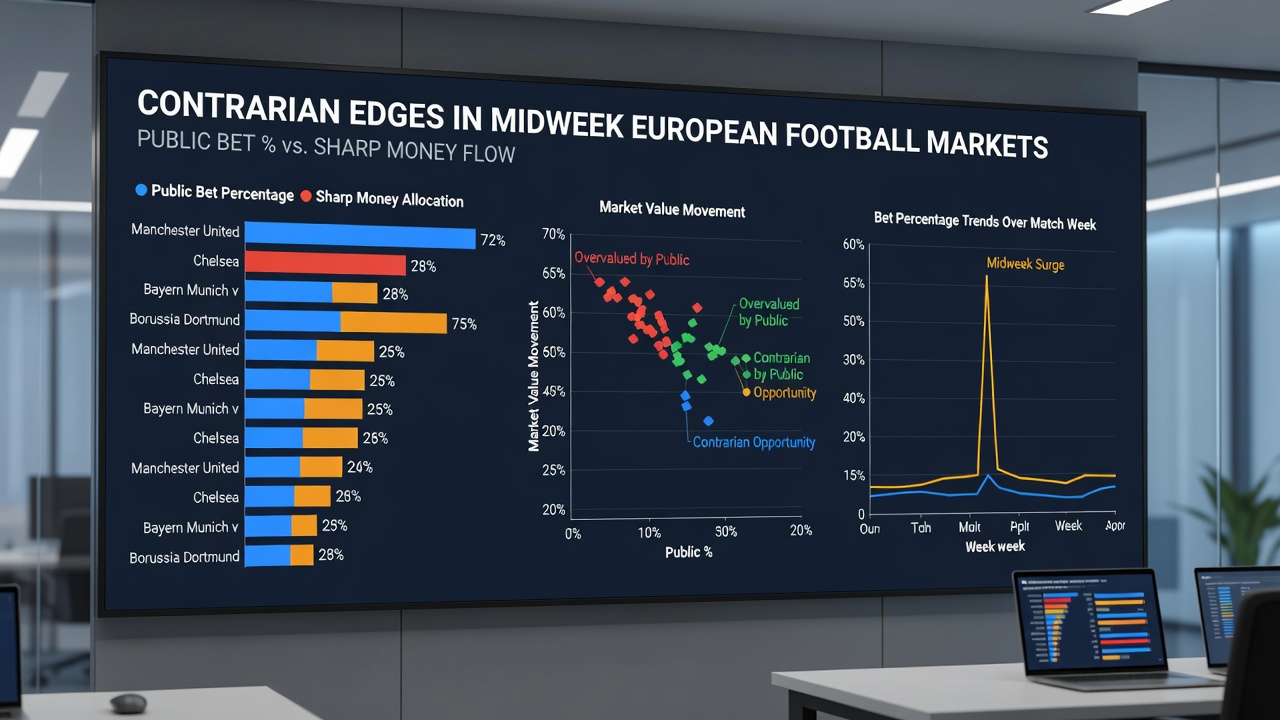
Analysts track these percentages alongside closing line movements to identify where sharp action counters the recreational flow. Studies conducted across multiple leagues confirm that discrepancies between public percentages and final odds frequently signal value on the less-supported side, especially in matches involving teams with congested schedules. The reality is that midweek European football amplifies these dynamics due to fixture congestion, which casual bettors factor in less systematically than professional syndicates.
Contrarian Patterns in Specific Midweek Markets
Contrarian approaches focus on matches where public bet percentages reach extreme levels, such as 75 percent or higher on the over total goals. Observers have documented that unders perform above expectation in these spots because public bettors emphasize attacking lineups while underestimating defensive setups common in rotated midweek lineups. Evidence from multiple campaigns shows this pattern holds across Serie A and La Liga cup competitions where teams prioritize league points over European progression.
Handicap markets offer another avenue, and data indicates that plus goals on underdogs attract less public attention yet close with favorable numbers when the favorite draws heavy support. Researchers discovered that in June 2026 European qualifiers, similar percentage imbalances preceded several results where the less-backed side covered the spread after early goals shifted momentum. Those patterns emerge because bookmakers balance liability by shading lines slightly against the public side, creating opportunities on the opposite outcome.
Integrating Percentage Data with Match Context
Successful application requires layering public bet percentages with situational factors like rest days and European travel distances. Reports from the European Football Observatory highlight how teams playing midweek after long journeys show reduced scoring rates, yet public percentages rarely adjust proportionally. Bettors who cross-reference these elements with percentage thresholds identify spots where the market overweights recent highlights rather than logistical realities.
Draw markets present additional contrarian opportunities when public support splits unevenly between two sides. Research indicates that percentages favoring one team above 60 percent often leave value on the draw because recreational bettors avoid stalemate outcomes in favor of decisive results. Midweek European fixtures amplify this tendency since teams adopt cautious approaches to secure advancement without excessive risk.
Tracking Percentages Across Bookmaker Platforms
Differences in public percentages appear across operators because customer bases vary by region and promotion focus. One study revealed that percentages from UK-facing sites diverge from those on continental platforms during midweek games involving British clubs, creating comparative edges when bettors monitor multiple sources. This variation stems from localized marketing that influences recreational volume toward certain selections.
Real-time monitoring tools aggregate these figures, and patterns emerge when percentages move sharply in the final hours before kickoff. Data shows that late surges toward the favorite frequently precede results that contradict the public flow, particularly in matches where lineups are confirmed close to start time. Observers note that incorporating this timing element refines contrarian selections beyond static percentage thresholds alone.
Conclusion
Public bet percentages serve as a measurable indicator for contrarian positioning in midweek European football markets, and combining them with fixture-specific details produces structured approaches grounded in observable data. European operators continue releasing these figures, enabling ongoing analysis across leagues and competitions where midweek schedules introduce distinct variables. Those applying consistent thresholds report sustained tracking of outcomes that diverge from majority sentiment, underscoring the utility of this information layer in broader betting frameworks.