Decoding Fixture Congestion Impacts on Midweek Football Accumulator Construction
Iris Otto · Jun 21, 2026
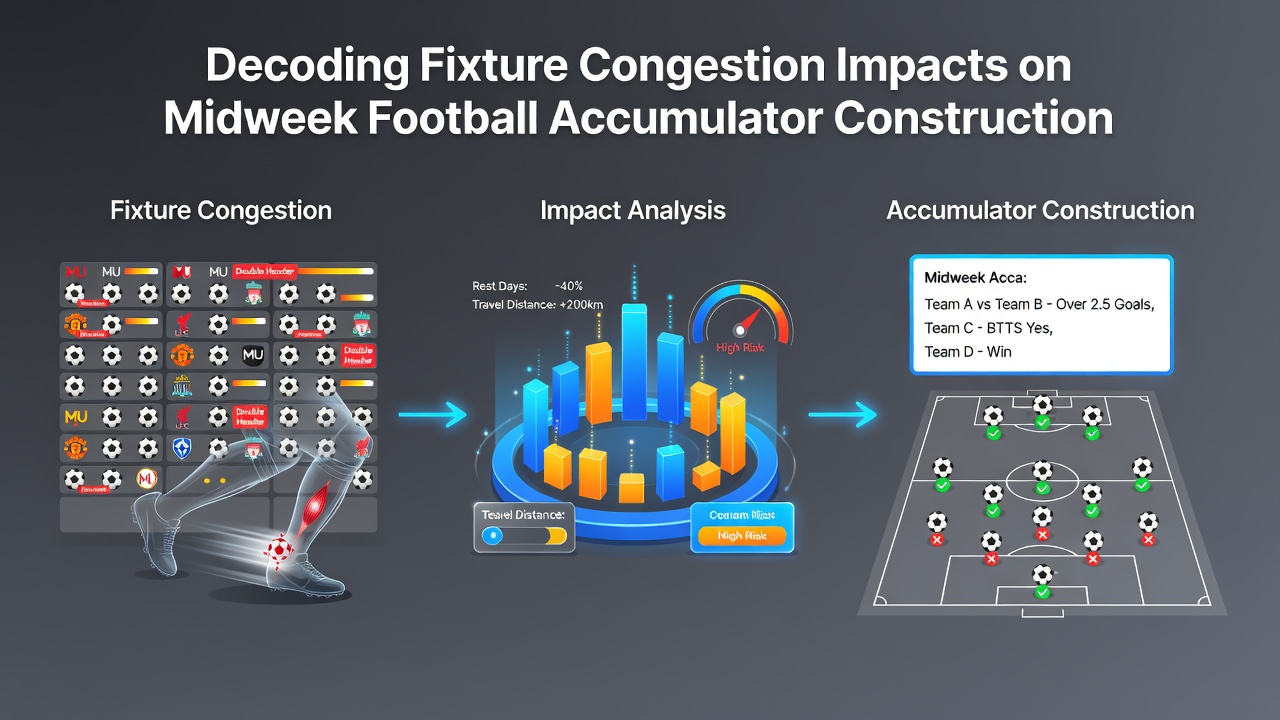
Decoding Fixture Congestion Impacts on Midweek Football Accumulator Construction
Fixture congestion arises when clubs face multiple matches across short timeframes, and data from major European leagues shows this pattern intensifies during midweek rounds involving domestic cups alongside continental competitions. Researchers at the University of Barcelona documented average rest periods dropping below 72 hours for top-flight squads in such windows, which correlates with measurable shifts in key performance metrics tracked by analysts.
Understanding the Mechanics of Congested Schedules
Leagues such as the Premier League, Bundesliga, and Serie A publish calendars that place midweek fixtures between weekend rounds, and UEFA Champions League group stages add further layers during autumn and spring. According to UEFA scheduling reports, teams advancing in multiple tournaments often complete five or six games within 21 days, creating recovery challenges that sports science teams monitor through GPS and heart-rate data. Observers note that rotation policies become essential, yet smaller squads lack the depth to maintain consistent lineups, which influences outcomes in matches selected for accumulator construction.
Those who track player workloads find that muscle fatigue accumulates faster under these conditions, with studies from the Aspetar Orthopaedic and Sports Medicine Hospital in Qatar revealing elevated injury rates during congested periods compared to standard schedules. This information feeds into betting models because reduced starting elevens alter expected goal tallies and clean-sheet probabilities that underpin many accumulator selections.
Performance Metrics and Statistical Patterns
Figures from Opta reveal that teams playing midweek European ties record 12 percent fewer high-intensity runs in subsequent domestic fixtures, while pass-completion rates dip by an average of three percentage points. Analysts at the CIES Football Observatory have compiled datasets showing these declines affect both attacking and defensive outputs, producing more draws and lower-scoring results than season-long averages. People constructing accumulators therefore examine recent rest days and travel distances, since away trips following continental matches compound the effects.
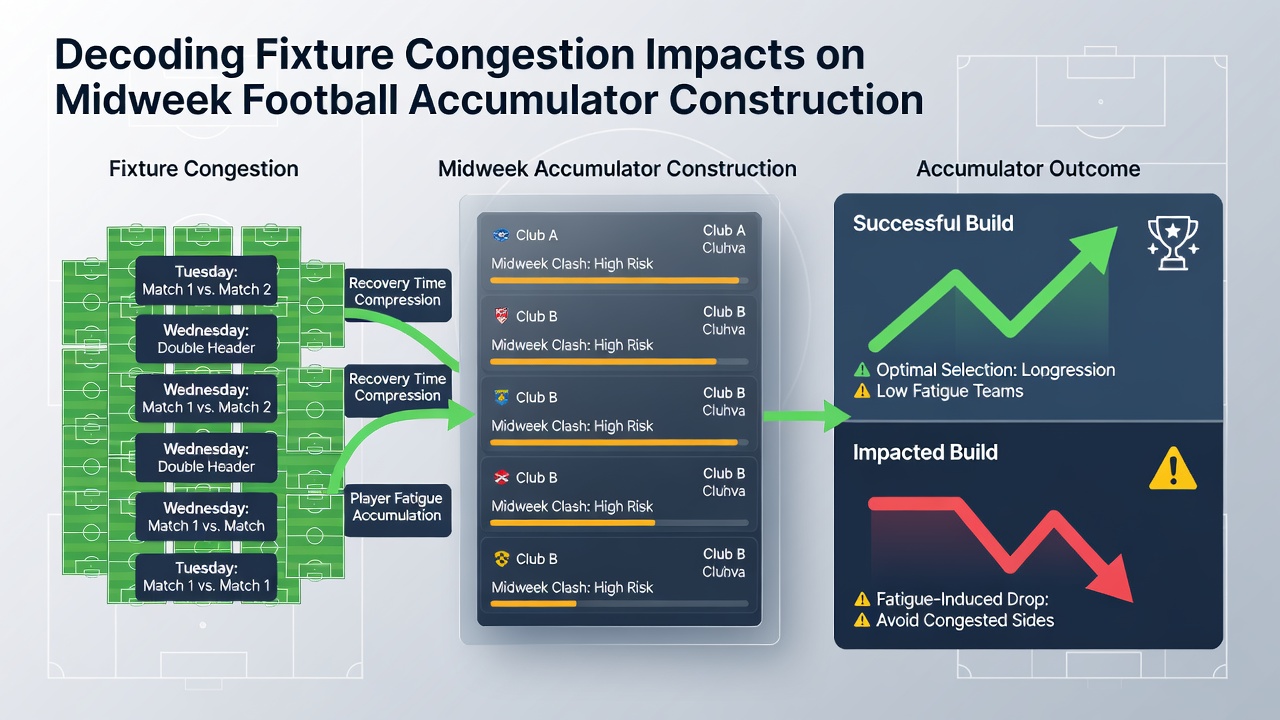
What's interesting is how these patterns vary by competition stage, with knockout ties generating higher stakes and therefore greater rotation urgency than group games. Data from the German Football League indicates Bundesliga clubs average 2.3 changes to their starting XI after midweek Champions League involvement, and such adjustments shift expected goal models used by professional syndicates. Turnout at training sessions also drops when fixture lists compress, according to reports compiled by the Professional Footballers' Association, further influencing match sharpness.
Accumulator Construction Adjustments
Accumulator builders who focus on over-2.5 goals markets frequently cross-reference fixture lists against squad news released 24 hours before kickoff. Research published in the Journal of Sports Sciences demonstrates that congested teams concede more shots from distance, elevating both goal and card probabilities in certain matchups. Those reviewing historical data note that midweek overs perform differently depending on whether both sides or only one side participated in European action the prior week.
Both-teams-to-score selections gain traction when one participant fields a rotated defense, and statistical services now publish rest-day differentials alongside standard form tables. In June 2026, additional scheduling pressure from pre-season tournaments and international windows will intersect with club calendars, prompting early adjustments to models that project summer and autumn congestion peaks. External travel across time zones adds another variable, with studies from the Australian Institute of Sport highlighting recovery timelines that extend beyond 96 hours for long-haul journeys.
League-Specific Observations and Data Sources
Italian Serie A fixtures often cluster around Coppa Italia midweek slots, and figures released by Lega Serie A show increased draw percentages during these blocks. French Ligue 1 encounters similar compression when Coupe de France ties overlap with Europa League commitments, producing parallel effects on expected points tallies. Observers cross-check these league reports against academic papers examining neuromuscular fatigue to refine selection criteria for multi-leg accumulators.
Links to broader research appear in publications from the International Olympic Committee, which compiles multi-sport workload guidelines applicable to football, and from the English Institute of Sport, whose athlete-monitoring protocols inform club medical departments. Such resources supply objective benchmarks rather than prescriptive advice, allowing data-driven refinements to betting frameworks.
Conclusion
Fixture congestion alters performance baselines in measurable ways that accumulator constructors incorporate through rest metrics, rotation tracking, and historical outcome comparisons. As calendars evolve toward 2026, continued collection of workload and result data will refine these analytical approaches across European competitions.