Betfred Plans to Close 132 Shops and Reduce Workforce by 600 Roles
Alex Baumann · Aug 7, 2026

Betfred Plans to Close 132 Shops and Reduce Workforce by 600 Roles
Betfred has confirmed plans to close 132 high-street betting shops across the UK, a move that represents more than 10 percent of its current estate, while cutting approximately 600 positions beginning in September 2026, and the company will retain roughly 1,100 locations once the reductions take effect. The announcement, issued in early August 2026, outlines a phased approach to the closures and job reductions that will unfold over subsequent months, and company representatives stated the decisions stem directly from recent government tax increases on the gambling sector along with broader economic uncertainty and mounting pressure on regulated operators. **Details of the Planned Reductions**
Executives at Betfred described the shop closures as a necessary response to sustained financial pressures, noting that the affected sites span various regions yet collectively account for a significant portion of the firm's physical footprint, while the remaining network of around 1,100 shops will continue operations under adjusted cost structures. The 600 job losses will primarily impact staff at the closing locations, although the company indicated some employees may receive offers for roles at other sites where positions remain available, and transition support measures are under consideration as part of the implementation timeline starting September 2026. Observers note that high-street betting outlets have faced shifting consumer patterns and rising operational expenses in recent years, which has prompted multiple operators to reassess their retail presence, yet Betfred's scale of reductions stands out as one of the more substantial adjustments announced to date. **Reasons Cited by the Company and Industry Body**
Betfred and the Betting and Gaming Council both pointed to recent tax increases as a central factor influencing the decision, explaining that higher duties have eroded margins for regulated businesses while unregulated alternatives continue to operate without similar constraints, and economic uncertainty has further complicated planning for capital-intensive retail networks. The Betting and Gaming Council highlighted how these tax changes, combined with ongoing compliance requirements, create an uneven competitive landscape that disadvantages established operators with physical shops, and the body emphasized that such pressures risk accelerating consolidation across the sector. Data from the announcement shows the closures will leave Betfred with approximately 1,100 shops, down from its prior total, and the company framed the move as a strategic realignment rather than a withdrawal from the high-street market entirely, with resources redirected toward sustaining the remaining estate. **Workforce and Operational Adjustments**
Around 600 positions will be eliminated through the shop closures, affecting roles ranging from retail managers to customer-facing staff, while the firm stated it aims to minimize compulsory redundancies where possible through natural attrition and internal transfers, and detailed consultation processes will begin ahead of the September 2026 start date. Those familiar with the betting retail sector recognize that maintaining large physical networks requires balancing footfall against fixed costs such as rent, utilities, and staffing, and Betfred's announcement reflects calculations that certain locations no longer meet viability thresholds under current tax and economic conditions. The remaining 1,100 shops will operate with streamlined staffing models, and the company indicated investments in technology and customer experience enhancements at surviving sites to offset the reduction in overall footprint, although specific investment figures were not disclosed in the initial statement. 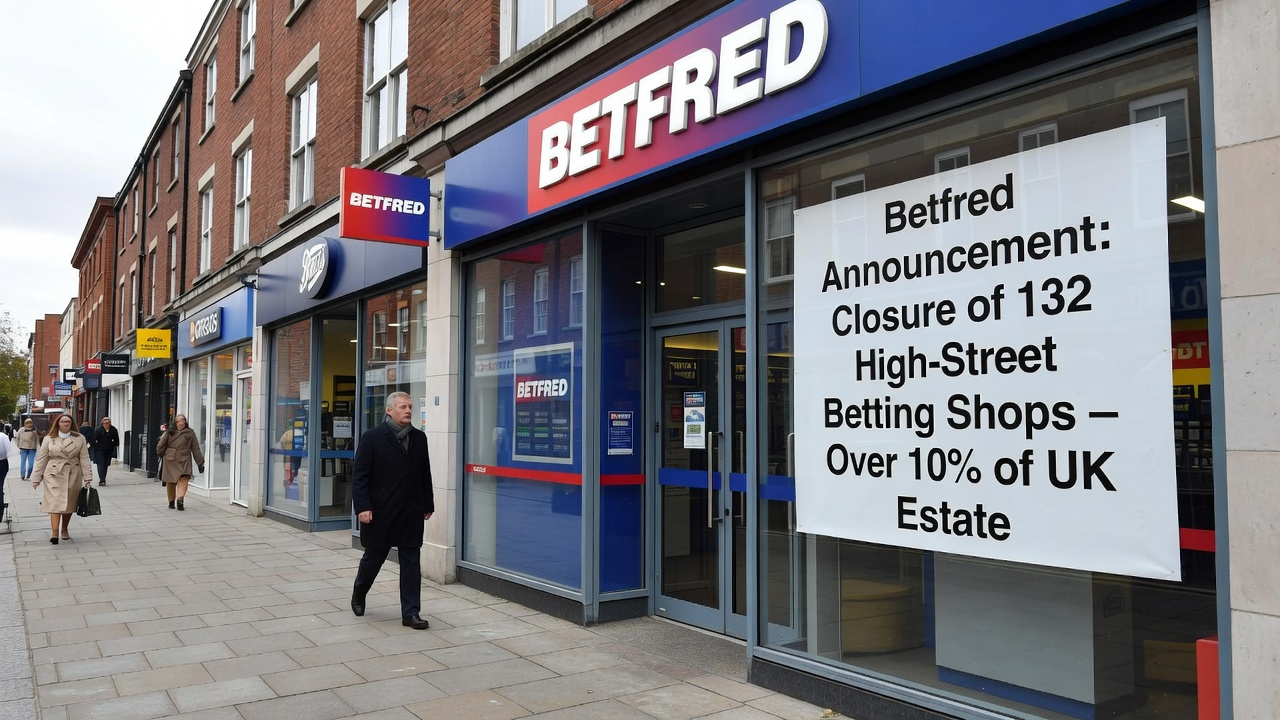 **Industry Context and Statements**
The Betting and Gaming Council described the Betfred announcement as indicative of wider challenges facing regulated gambling businesses, noting that tax rises have increased the cost base for operators with extensive retail operations while consumer spending power remains variable amid economic conditions, and the council called for policy reviews that account for these cumulative impacts. Company statements released alongside the news stressed that the closures represent a measured response rather than an abrupt exit, and Betfred reiterated its commitment to responsible gambling standards across the retained network, with compliance teams continuing to oversee operations in line with existing requirements. Figures released as part of the announcement reveal that the 132 shops targeted for closure constitute over 10 percent of the total estate, a proportion that underscores the magnitude of the adjustment and the extent to which tax and economic factors have influenced strategic planning for 2026 and beyond. **Timeline and Next Steps**
Implementation begins in September 2026, with closures and associated job reductions rolling out progressively rather than all at once, which allows for phased customer notifications and staff consultations, and the company has committed to providing updates as the process advances through the following months. Local authorities and community stakeholders in areas affected by the closures will receive advance notice, although the precise locations of the 132 shops have not yet been published, and further details are expected in the coming weeks as internal reviews conclude. The retained network of approximately 1,100 shops will serve as the foundation for Betfred's ongoing high-street presence, and the firm indicated that performance at these sites will be monitored closely to determine any future adjustments once the current round of changes stabilizes.
**Industry Context and Statements**
The Betting and Gaming Council described the Betfred announcement as indicative of wider challenges facing regulated gambling businesses, noting that tax rises have increased the cost base for operators with extensive retail operations while consumer spending power remains variable amid economic conditions, and the council called for policy reviews that account for these cumulative impacts. Company statements released alongside the news stressed that the closures represent a measured response rather than an abrupt exit, and Betfred reiterated its commitment to responsible gambling standards across the retained network, with compliance teams continuing to oversee operations in line with existing requirements. Figures released as part of the announcement reveal that the 132 shops targeted for closure constitute over 10 percent of the total estate, a proportion that underscores the magnitude of the adjustment and the extent to which tax and economic factors have influenced strategic planning for 2026 and beyond. **Timeline and Next Steps**
Implementation begins in September 2026, with closures and associated job reductions rolling out progressively rather than all at once, which allows for phased customer notifications and staff consultations, and the company has committed to providing updates as the process advances through the following months. Local authorities and community stakeholders in areas affected by the closures will receive advance notice, although the precise locations of the 132 shops have not yet been published, and further details are expected in the coming weeks as internal reviews conclude. The retained network of approximately 1,100 shops will serve as the foundation for Betfred's ongoing high-street presence, and the firm indicated that performance at these sites will be monitored closely to determine any future adjustments once the current round of changes stabilizes.